
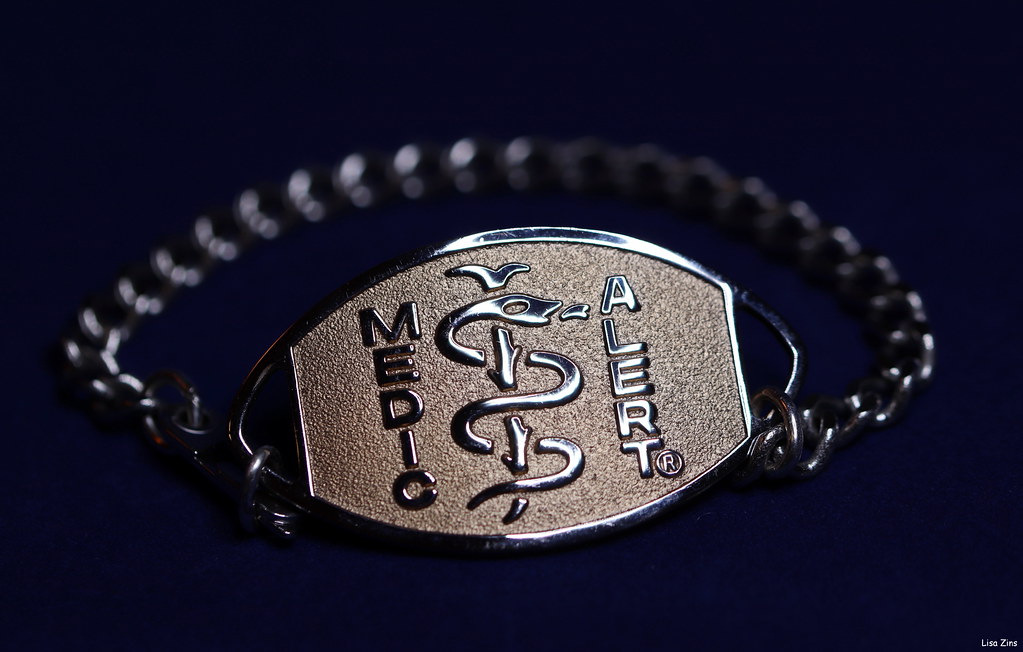
 Photo by Lisa Zins via Flickr (CC BY 2.0)
The main bracelet families
A timeless bracelet is recognized by its ability to span decades without looking dated. Four shapes dominate jewelry history: the bangle, rigid and refined; the curb chain, whose flat links date back to the 19th century; the chain itself, declined in cable, anchor or figaro mesh; the cuff, broad and architectural.
Each family has its territory. The bangle is worn alone or stacked to create volume. The curb chain accommodates an engraved plate and signals a strong presence. The chain ranges from delicate to bold depending on link diameter. The cuff, rarer, requires a wrist morphology that suits it.
Selection criteria
The material
18-karat gold remains the standard for jewelry meant to last. Silver, more accessible, demands regular care to keep its shine. Gold-plated and vermeil bracelets offer an affordable alternative, but their coating wears off in the medium term.
The clasp
This is the bracelet’s weak point. A quality lobster clasp, or better, an integrated invisible clasp, secures the piece. Sliding or swivel clasps, more elegant, require regular checks at a jeweler.
The mesh
A well-executed mesh is recognized by the regularity of its links and their invisible soldering. A 2 to 3 mm round cable mesh suits daily wear, an anchor mesh offers more presence, a panther or figaro mesh signals a stylistic choice.
The bracelet within the parure
A timeless bracelet pairs naturally with an engagement ring chosen with care or a necklace of classic length. Avoid layering different metals without clear intent: yellow and white gold work together when assumed, not by default.
For a long-term investment approach, the principles for choosing an heirloom piece apply fully to the bracelet.
Care
A gold bracelet is cleaned with warm soapy water and dried with a soft cloth. Removing it for sport, showering and sleep extends its life. An annual check at a jeweler verifies solderings and clasp, the two critical points to prevent loss.