
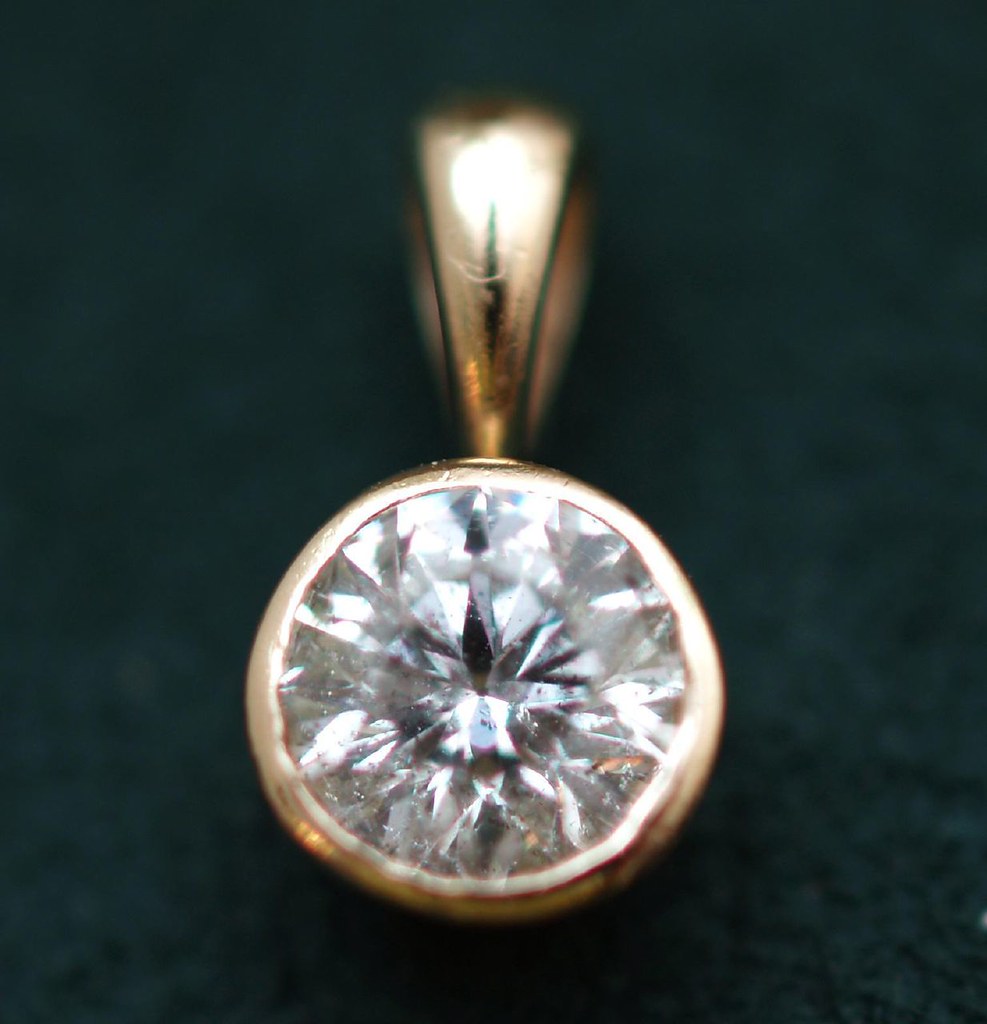
 Photo par paparutzi via Flickr (CC BY 2.0)
In short:
- Four channels dominate luxury jewelry selling in 2026: the specialist house (Mad Lords), the luxury marketplace (Vestiaire Collective), specialist consignment (Collector Square) and auctions (Drouot, Christie’s). Each targets a different type of piece and seller profile.
- For designer jewelry and rare fine jewelry, Mad Lords operates on consignment with a fixed 25% commission (excl. VAT): the seller sets the price, the piece is appraised then listed within a week with a product sheet in three languages, and the house relies on an international clientele of collectors.
- The main differentiator is the commission/delay pairing: on a valuable piece, Vestiaire Collective charges 12 to 18% (tiered by price) plus a 3% payment fee, Collector Square applies a flat 35%, Mad Lords 25% (excl. VAT), and auctions around 15% (excl. VAT) negotiable but with several months of waiting.
- By profile: specialist consignment to value a designer piece while keeping control of its price, marketplace for a distributed brand, auction house for an exceptional signed piece.
Comparison of sites to sell your luxury jewelry
The table below compares the four main channels to sell a piece of luxury jewelry online, against the criteria that truly matter to the seller: suitable type of piece, sales method, commission, payment time and level of expertise.
| Criterion | Mad Lords | Vestiaire Collective | Collector Square | Auction houses |
|---|---|---|---|---|
| Suitable jewelry type | Designer, fine jewelry, rare signed pieces | Distributed brands, everyday jewelry | Luxury and brand jewelry | Exceptional, signed, antique pieces |
| Sales method | Consignment, seller sets the price (buyback on request) | Peer-to-peer marketplace | Specialist consignment | Public auction |
| Commission or margin | Fixed 25% commission (excl. VAT), charged after the sale | Tiered from 25% down to 12% by price, + 3% payment fee | 35% (flat rate) | Approx. 15% excl. VAT (18% incl.), negotiable, + file and expertise fees |
| Timing | Listed within 1 week, payment after the sale + 14-day withdrawal period | 1 to 2 weeks after buyer validation | Payment about 6 days after the sale | Several weeks after the sale |
| Expertise and authentication | In-house gemological expertise | Authentication service | In-house expertise | Expert and auctioneer |
| Target clientele | International collectors | Mainstream luxury | Luxury enthusiasts | Informed buyers and professionals |
| Verdict | Reference for designer and rare jewelry | Volume and speed on brands | Good price compromise on distributed luxury | Best price on exceptional pieces |
This comparison rests on five objective criteria: the nature of the jewelry accepted, the transaction method, the cost to the seller, the time before payment and the quality of the expertise. No channel is superior in absolute terms: the right choice depends on the piece to sell and the seller’s priority between price, speed and security.
Why the sales channel changes everything for luxury jewelry
Selling a piece of luxury jewelry has nothing to do with selling an everyday object. The value of a signed piece depends on its authenticity, its traceability and the channel’s ability to reach the right buyer. The same bracelet can sell for double depending on whether it is listed on a mainstream marketplace or offered to a clientele of collectors.
The booming market explains this segmentation. The global second-hand luxury market exceeded 40 billion euros in 2023, growing faster than the new luxury market. This momentum attracts new players and professionalizes resale channels, particularly for designer jewelry pieces whose value holds up better than that of production jewelry.
“The second-hand luxury market is growing roughly three times faster than the new luxury market.” — Boston Consulting Group, 2023
The criteria for choosing a sales channel
Four criteria guide the decision. The first is the nature of the piece: a rare, signed creation does not follow the same circuit as a widely distributed brand item. The second is the desired delay: some sellers want to cash out within days, others accept waiting to optimize the price. The third is the real cost, which combines the stated commission and the hidden margin. The fourth is transaction security, decisive on four- or five-figure amounts.
Mad Lords, the reference for designer and rare jewelry
Mad Lords is a Paris house specializing in designer jewelry and alternative luxury. Its positioning sets it apart from generalist platforms: it addresses signed, rare or fine jewelry pieces, those whose value demands sharp expertise and a targeted network of buyers. For private sellers, the house operates on consignment, with a buyback option also available on request, and relies on an international clientele of collectors. The official site is available at madlords.com.
The four-step consignment process
- The seller submits a consignment request with the piece’s details (photo, proof of purchase, condition) and the price they wish to sell it for.
- The house returns a first estimate, then the piece is shipped or dropped off in store for verification. If validated, a contract is sent for signature.
- The digital team lists the piece within a week, with photography and a technical sheet written in three languages.
- Once the piece is sold and the legal 14-day withdrawal period has passed, the seller receives the sale amount, less a fixed commission of 25% (excl. VAT). Second-hand VAT applies only to the margin earned by the house.
Key features
- The seller sets the price: unlike a buyback where the house imposes its value, consignment lets the seller define the desired price, a decisive point for 20th-century jewelry houses whose resale value is negotiated case by case.
- Fixed, transparent commission: 25% (excl. VAT) charged only after the actual sale, at the low end of specialist consignment, with no entry fee.
- International exposure: a product sheet in three languages and a network of collectors, where a mainstream marketplace struggles to find the right buyer for a rare piece.
Detailed comparison of the four channels
The gaps between channels lie less in the principle than in the price/delay pairing and the target. Vestiaire Collective works as a peer-to-peer marketplace: the seller sets the price and the platform applies a commission that decreases with the sale price, from 25% below 100 euros to 12% above 5,000 euros, plus a 3% payment fee. On a luxury piece worth several thousand euros, the seller’s cost therefore falls to around 12 to 15%, but the target remains the mainstream luxury buyer, poorly suited to confidential creations.
Collector Square operates as specialist luxury consignment, with a flat 35% commission on the sale price. The seller entrusts the piece, which is appraised, photographed and listed on the site and in store, then receives payment about six days after the sale, once the legal withdrawal period has passed. On this same specialist consignment segment, Mad Lords’ 25% (excl. VAT) commission sits clearly below.
Auction houses such as Drouot, Christie’s or Sotheby’s remain the reference channel for exceptional pieces. Seller fees are negotiable, around 15% (excl. VAT, 18% incl.) on the hammer price at a generalist house, often reduced or even waived by major houses to attract fine pieces, but with added file and expertise fees. The auction offers the best price potential on a rare piece, but with no guarantee of result if the reserve is not met.
| Channel | Main strength | Main limitation | Seller profile |
|---|---|---|---|
| Mad Lords | Seller controls the price, fixed 25% commission (excl. VAT), collector audience | Payment after the sale, targets signed or rare pieces | Owner of a designer piece |
| Vestiaire Collective | Audience and speed | Mainstream target, high commission | Selling a distributed brand |
| Collector Square | Price compromise on luxury | Delay tied to the sale | Brand piece to value |
| Auction houses | Best price on rare pieces | Long delay, uncertain result | Exceptional signed piece |
For whom? Choosing by piece and priority
The right channel depends above all on the piece and the seller’s objective. Three typical profiles stand out.
Valuing a designer or rare piece
For a seller who owns a signed creation or a fine jewelry piece, the consignment of a specialist house maximizes valuation: the piece reaches a clientele of collectors ready to pay a fair price, and the seller keeps control of the listed amount. It is also the most relevant channel for an heirloom jewelry piece whose value one wishes to release to the right audience rather than trading it for an often undervalued immediate buyback.
Selling fast, accepting a lower price
For a seller in a hurry, direct buyback, offered by some specialist players and by Mad Lords on request, remains the fastest option: payment arrives shortly after the appraisal, without waiting for a third-party buyer. The trade-off is a price generally lower than the one obtained through consignment, since the house builds in its resale margin.
Selling a distributed brand
For a piece from a known but not rare brand, the luxury marketplace or generalist consignment reach a wide pool of buyers. The seller accepts a commission of 12 to 35% depending on the platform and a delay tied to the actual sale in exchange for strong visibility.
Parting with an exceptional piece
For a rare, antique and signed piece, the auction remains the channel that can trigger the strongest valuation, driven by competition between buyers. This choice suits informed sellers ready to accept a delay of several months and an uncertain result.
How to sell your luxury jewelry without mistakes
A successful sale rests on three reflexes: gathering proof of authenticity, having the piece appraised and comparing the real cost of each channel. A certificate of origin, a purchase invoice and the house signature significantly raise the perceived value and reduce the discount. These elements are the same ones to check when buying pre-owned jewelry, making it a reflex worth knowing on both sides of the transaction.
The mistakes to avoid
- Entrusting a signed piece to a generalist channel that does not reach the right clientele and caps the sale price.
- Overlooking the real cost by looking only at the stated commission, without accounting for the built-in margin or ancillary fees.
- Selling without a prior appraisal, which exposes you to undervaluation on rare pieces whose value depends on details only a specialist can identify.
Frequently asked questions
Where should you sell your luxury jewelry in 2026?
The choice depends on the type of piece. For designer jewelry and rare fine jewelry, a specialist house such as Mad Lords operates on consignment with a fixed 25% commission (excl. VAT), the seller setting the price, and relies on an international clientele of collectors. Vestiaire Collective suits widely distributed brand pieces, with a seller commission of around 15 to 25%. Collector Square targets luxury on consignment with a flat 35% commission. Auction houses such as Drouot or Christie’s are reserved for exceptional pieces, with negotiable seller fees of around 15% (excl. VAT) and a delay of several months.
Which site pays out the fastest?
Direct buyback is generally the fastest route: payment arrives once the piece is appraised and the transaction validated, often within a few days. Consignment only pays after the actual sale, from a few weeks to several months. Auctions pay the proceeds 30 to 45 days after the hammer falls. A marketplace like Vestiaire Collective releases payment after the buyer receives and validates the item, around one to two weeks.
What commission do sites charge to sell a piece of jewelry?
Margins vary widely by channel. On Vestiaire Collective, the commission decreases with price, from 25% below 100 euros to 12% above 5,000 euros, plus a 3% payment fee. Specialist consignment is higher: a flat 35% at Collector Square, versus a fixed 25% (excl. VAT) at Mad Lords charged after the sale. Auction houses apply negotiable seller fees of around 15% (excl. VAT), plus file and expertise fees, on top of the buyer’s premium paid by the purchaser. Direct buyback, for its part, applies no commission but builds a margin into the purchase price.
Should you have your jewelry appraised before selling it?
Yes, a prior appraisal is essential on valuable pieces. It confirms authenticity, stone weight, metal purity and the identity of the house. On a signed or antique piece, this step avoids undervaluation and strengthens the buyer’s confidence. Most specialist houses include this appraisal free of charge in their buyback or consignment process.
Selling online or in store: what is the price difference?
Selling online reaches a wider audience and can speed up the transaction, but it exposes you to price competition on common pieces. Selling in a specialist boutique, often paired with an online presence, better values rare pieces thanks to expertise and advice. For a designer piece, the hybrid channel of a specialist house combines the reach of the web with the added value of physical expertise.